

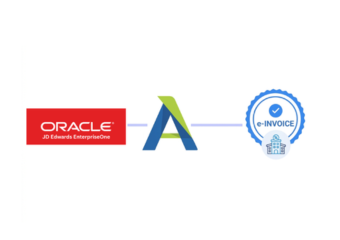
Supporting Compliant Oracle JD Edwards EnterpriseOne Invoicing
How Advintek Processes Invoices from Oracle JD Edwards EnterpriseOne
- Capture ERP Transactions: Capture relevant Oracle JD Edwards EnterpriseOne orders, suppliers, customers, inventory, procurement, and accounting information for processing.
- Validate Business References: Validate business units, addresses, accounts, tax information, and transaction references before processing.
- Prepare Invoice Information: Prepare structured invoice records from approved Oracle JD Edwards EnterpriseOne transactions while preserving source relationships.
- Connect Accounting Applications: Connect invoice information with accounting environments supporting receivables, payables, and general ledger workflows.
- Compare ERP Transactions: Compare processed invoices against originating orders, receipts, accounts, and financial transactions.
- Preserve Transaction Documentation: Preserve supporting invoice records alongside JDE references for reporting, review, and reconciliation.
What Does Advintek’s Oracle JD Edwards EnterpriseOne Connector Handle?
Advintek connects Oracle JD Edwards EnterpriseOne applications and transactional records across order management, procurement, inventory, manufacturing, and accounting.
- Link sales orders with receivables
- Match suppliers with payable transactions
- Associate inventory movements with accounting
- Connect business units with invoices
Why Advintek Works Well with Oracle JD Edwards EnterpriseOne Processes
- Order Management Continuity: Coordinate sales orders, customer information, fulfillment activity, and invoice records across integrated Oracle JD Edwards EnterpriseOne processes.
- Procurement Accounting Alignment: Connect purchasing activity with receipts, supplier information, vendor transactions, and accounts payable records.
- Inventory Transaction Context: Relate inventory movements with commercial transactions and financial records throughout EnterpriseOne operations.
- Manufacturing Finance Coordination: Associate production-related activity with relevant orders, materials, inventory, and accounting information.
- Business Unit Visibility: Maintain business-unit context across invoice records and financial transactions for clearer enterprise accounting review.
- General Ledger Integration: Connect electronic invoice information with relevant ledger activity supporting broader Oracle JD Edwards EnterpriseOne financial management.
One Connected Platform for USA e-Invoicing
Business Unit Analysis
Analyze invoice activity across Oracle JD Edwards EnterpriseOne business units for detailed enterprise finance review.
Account Relationship Mapping
Map invoice records against relevant accounts and associated EnterpriseOne financial transactions.
Module Activity Oversight
Monitor information exchanged across JDE modules supporting integrated invoicing and accounting operations.
Oracle JD Edwards EnterpriseOne Support for Businesses Across USA
Advintek supports Oracle JD Edwards EnterpriseOne environments where operational modules, accounting functions, procurement, manufacturing, inventory, and sales contribute to connected finance.
- Manufacturers coordinating production with accounting
- Distributors integrating orders and inventory
- Enterprises managing business-unit finance
- Finance teams connecting procurement records
Activate Connected E-Invoicing Workflows
Extend Oracle JD Edwards EnterpriseOne into U.S. e-invoicing and connected finance processes.
Align ERP accounting data across integrated business workflows.
Ready e-Invoice System
FAQs About EnterpriseOne e-Invoicing in USA
Which Oracle JD Edwards EnterpriseOne records can support electronic invoicing?
Oracle JD Edwards EnterpriseOne can contain relevant information across sales orders, customer records, procurement transactions, inventory activity, business units, accounts receivable, accounts payable, and general ledger processes. Advintek can identify applicable records and structure their information for electronic invoice workflows while preserving relationships with the originating JDE transactions and corresponding financial processes.
How does Oracle JD Edwards EnterpriseOne handle customer and supplier data?
Oracle JD Edwards EnterpriseOne uses structured customer and supplier information that can support sales, purchasing, billing, and accounting workflows. Advintek can connect applicable address book records with invoice transactions while maintaining their ERP context. This allows customer and supplier information to remain associated with corresponding commercial and financial records throughout electronic invoice processing.
Can manufacturing and inventory activity connect with invoices?
Manufacturing and inventory information within Oracle JD Edwards EnterpriseOne can provide transaction context for sales, procurement, fulfillment, and financial processes. Advintek can associate relevant inventory or production records with invoice workflows where applicable. This helps organizations maintain relationships between operational activity, commercial transactions, and accounting information within their broader JDE ERP environment.
How does e-Invoicing Software in USA integrate with Oracle JD Edwards EnterpriseOne?
e-Invoicing Software in USA can connect with Oracle JD Edwards EnterpriseOne to receive relevant ERP information and prepare structured electronic invoice records. Advintek supports data transformation, validation, accounting integration, reconciliation, and document organization. This allows organizations to coordinate Oracle JD Edwards EnterpriseOne sales, procurement, inventory, and finance information within connected E-invoicing workflows.
What can e-Invoicing Solutions in USA provide Oracle JD Edwards EnterpriseOne users?
e-Invoicing Solutions in USA can connect Oracle JD Edwards EnterpriseOne transactions with electronic invoice preparation, accounting processes, reconciliation, and financial documentation. Advintek can preserve relationships between invoice records and originating JDE transactions across multiple ERP functions. Applicable IRS-related recordkeeping considerations can also be supported through organized E-records associated with underlying EnterpriseOne financial activity.